

Personal Life & Political Career
Personal Life & Political Career
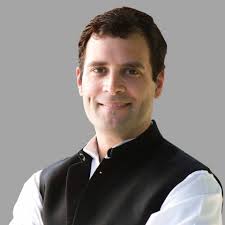
In March 2004, Gandhi announced his entry into politics by announcing that he would contest the May 2004 elections, standing for his father's former constituency of Amethi in Uttar Pradesh in the Lok Sabha, India's lower house of Parliament.His mother had held the seat until she transferred to the neighbouring seat of Rae Bareilly. The Congress had been doing poorly in Uttar Pradesh, holding only 10 of the 80 Lok Sabha seats in the state at the time. At the time, this move generated surprise among political commentators, who had regarded his sister Priyanka as being the more charismatic and likely to succeed. It generated speculation that the presence of a young member of India's most famous political family would reinvigorate the Congress party's political fortunes among India's youthful population[21] In his first interview with foreign media, Gandhi portrayed himself as an uniter of the country and condemned "divisive" politics in India, saying that he would try to reduce caste and religious tensions.Gandhi won, retaining the family stronghold with a victory margin of over 100,000.Until 2006 he held no other office.
Gandhi entered politics in 2004 and successfully contested the general elections held that year from Amethi, a seat that was earlier held by his father; he won again from the constituency in 2009 and 2014. Amidst calls from Congress party veterans for his greater involvement in party politics and national government, Gandhi was elected Congress Vice-President in 2013, having served as the General Secretary previously. Gandhi led Congress' campaign in the 2014 Indian general elections, the party suffered its worst electoral result in its history, winning only 44 seats compared to 206 seats won previously in the 2009 general election.
Gandhi took over as the president of the Congress in December 2017. He is also a Trustee of Rajiv Gandhi Foundation and Rajiv Gandhi Charitable Trust.
Youth politics
In September 2007 when he was appointed general secretary in charge of the Indian Youth Congress (IYC) and the National Students Union of India (NSUI), Gandhi promised to reform youth politics. In his attempt to prove himself thus, in November 2008 Gandhi held interviews at his 12 Tughlak Lane residence in New Delhi to handpick at least 40 people who will make up the think-tank of the Indian Youth Congress (IYC), an organisation that he has been keen to transform since he was appointed general secretary in September 2007.
Under Gandhi, the IYC and NSUI have seen a dramatic increase in members from 200,000 to 2.5 million.The Indian Express wrote in 2011, "Three years later, as another organisational reshuffle is in the offing, Gandhi's dream remains unrealised with party veterans manipulating internal elections in the Youth Congress and a host of people with questionable background gaining entry into it."
2009 elections
In the 2009 Lok Sabha elections, Gandhi retained his Amethi seat by defeating his nearest rival by a margin of over 370,000 votes. Gandhi was credited with the Congress revival in Uttar Pradesh where they won 21 out of the total 80 Lok Sabha seats. He spoke at 125 rallies across the country in six weeks. The nationwide elections defied the predictions made by pre-poll predictions and exit polls and gave a clear mandate to the incumbent Congress-led UPA government.
In May 2011, Gandhi was arrested by the Uttar Pradesh Police at Bhatta Parsaul village after he turned out in support of agitating farmers demanding more compensation for their land being acquired for a highway project. Gandhi was taken away from the protest site and later given bail and dropped off at the Delhi-UP border.
2012 Assembly elections
Gandhi campaigned during the 2012 Assembly elections in the politically crucial Uttar Pradesh election for almost two months, holding 200 rallies. However Congress ranked as the fourth party in the state, winning 28 seats, an increase of six seats from the previous 2007 elections. Out of the 15 seats in the Amethi parliamentary constituency, Congress won two.
Congress activists defended the result in Uttar Pradesh, saying "there's a big difference between state elections and national polls and in the end there is only the first family, a hope and a prayer", and pointing out the turn around attributed to Gandhi in the 2009 Lok Sabha national elections in the state. However, Rahul Gandhi publicly accepted responsibility for the result in an interview after the result was declared.
In the Gujarat assembly elections held later in the year, Gandhi was not made the head of the election campaign. This was seen and regarded by opponents as an admission of defeat and was termed as a tactic to avoid blame of defeat.Congress won 57 seats in the assembly of 182, which was 2 less than the previous elections in 2007. Later in bypolls, Congress lost 4 more seats to BJP.
Indian general election, 2014
Gandhi contested the Indian general election, 2014 from his constituency, Amethi.and led the election campaign of the Indian National Congress. Gandhi held the Amethi seat by defeating his nearest rival, BJP's Smriti Irani, by a reduced margin of 107,000 votes. Under his leadership, the Indian National Congress suffered its worst ever performance in elections and won only 44 seats compared to 206 seats won previously in the 2009 general election. The Congress-led electoral alliance, the UPA also had its worst ever performance in elections and won only 59 seats compared to 262 seats won previously in the 2009 general election. After the defeat, Gandhi offered to resign his posts, only to be rejected by the party's working committee.