
Personal Life & Political Career
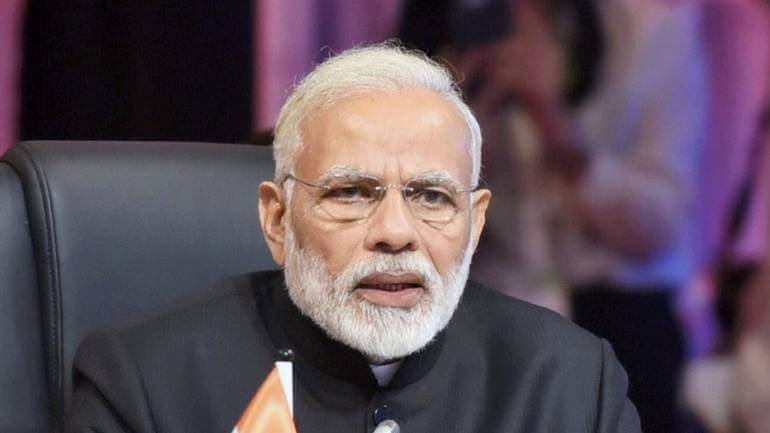
Narendra Damodardas Modi is an Indian politician serving as the 14th and current Prime Minister of India since 2014. He was the Chief Minister of Gujarat from 2001 to 2014, and is the Member of Parliament for Varanasi.
Narendra Modi was born on 17 September 1950 to a family of grocers in Vadnagar, Mehsana district, Bombay State (present-day Gujarat). He was the third of six children born to Damodardas Mulchand Modi (c.1915 – 1989) and Hiraben Modi (born c.1920). Modi's family belonged to the Modh-Ghanchi-Teli (oil-presser) community, which is categorised as an Other Backward Class by the Indian government.
Modi was appointed Chief Minister of Gujarat in 2001, due to Keshubhai Patel's failing health and poor public image following the earthquake in Bhuj. Modi was elected to the legislative assembly soon after. His administration has been considered complicit in the 2002 Gujarat riots, or otherwise criticised for its handling of it, however a Supreme Court-appointed Special Investigation Team (SIT) found no evidence to initiate prosecution proceedings. His policies as chief minister, credited with encouraging economic growth, have received praise. His administration has been criticised for failing to significantly improve health, poverty, and education indices in the state.
Modi led the BJP in the 2014 general election, which gave the party a majority in the Lok Sabha, the first time a single party had achieved this since 1984. Modi himself was elected to parliament from Varanasi. Since taking office, Modi's administration has tried to raise foreign direct investment in the Indian economy, increased spending on infrastructure, and reduced spending on healthcare and social welfare programmes. Modi has attempted to improve efficiency in the bureaucracy, and centralised power by abolishing the planning commission and replacing it with the NITI Aayog. He has begun a high-profile sanitation campaign, and weakened or abolished environmental and labour laws. Credited with engineering a political realignment towards right-wing politics, Modi remains a figure of controversy domestically and internationally over his Hindu nationalist beliefs and his role during the 2002 Gujarat riots, cited as evidence of an exclusionary social agenda.
In September 2013 Modi was named the BJP's candidate for prime minister in the 2014 Lok Sabha election. Several BJP leaders expressed opposition to Modi's candidature, including BJP founding member L. K. Advani, who cited concern with leaders who were "concerned with their personal agendas". Modi played a dominant role in the BJP's election campaign. Several people who voted for the BJP stated that if Modi had not been the prime-ministerial candidate, they would have voted for another party. The focus on Modi as an individual was unusual for a BJP election campaign. The election was described as a referendum on Narendra Modi.